Promotional Films
We prepare professional content that conveys your company's mission, vision and services in detail.
What we offer
- Corporate storytelling
- Interviews and voice-over
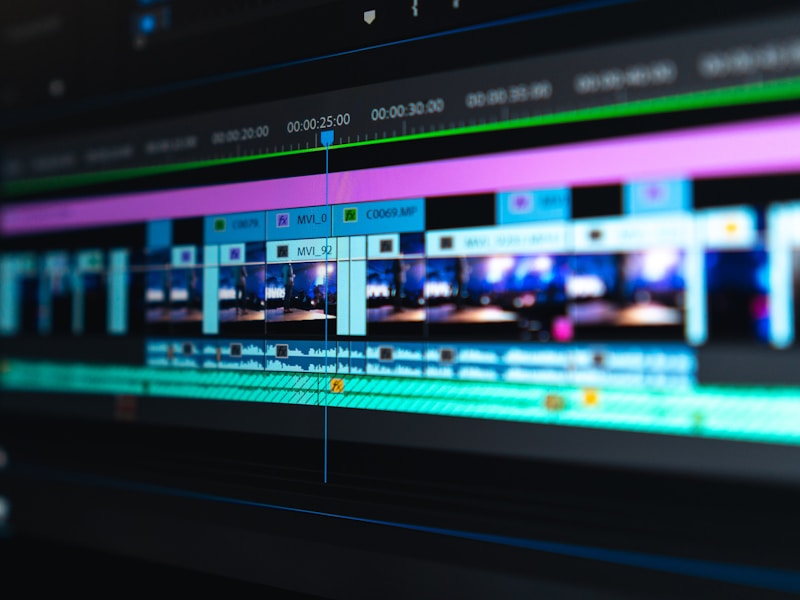
- End-to-end post-production
What does a corporate promotional film tell?
A corporate promotional film tells, in a few minutes, who your company is, what it does and how it does it. Promotional films are made less to announce a campaign than to build trust: before deciding to work with you, viewers want to see your production, your team and the way you work. For someone with no time to tour your facility or visit your office, the film stands in for that visit.
In this respect, promotional films differ from short, single-message campaign films. A campaign film tries to catch the viewer at a moment when they do not yet know the brand; a corporate promotional film is more often watched by someone who is already interested in you, on your website, at a trade fair or in a meeting. If you are looking for a short, fast-paced film, you can take a look at our commercial films page.
Who are promotional films made for?
A corporate promotional film speaks not to a single viewer but to several groups who come into contact with the company for different reasons. What each group expects from the film is different:
- Potential customers and purchasing teams: They want to see production capacity, quality and processes.
- Dealers and business partners: They want to get to know the company and the team they will work with.
- Investors and financial institutions: They want to see the direction of the company and the people who run it.
- Prospective employees: They are curious about the working environment and company culture.
- Trade fair and event visitors: They want to understand the company quickly as they walk past the stand.
Deciding up front which group the film will prioritize also determines the tone and length of the narrative. A film aimed at investors and a film aimed at prospective employees may use the same footage, but they do not say the same sentences.
A single film or a film series?
For some companies a single main film is enough; others want to speak to different audiences separately. In that case, a main film, short films for each service or product group and a separate piece for recruitment can be cut from the same shoot days. When promotional films are planned as a series this way, the shot list is prepared for it from the start and the same footage is used consistently across the different films.
What structures do promotional films use?
Not every company’s story fits the same mold. We choose the structure that will carry the corporate narrative according to the subject to be told and the people who will appear on camera. Most of the time, one of the approaches below, or a mix of them, is used.
Interview-led narration
The founder, managers, engineers or a master craftsperson who has worked at the company for a long time tell the company’s story in their own words. In promotional films built on interviews, the voices of real people are more convincing than a prepared script. For a good result, the interview needs to be prepared in advance and edited carefully.
Voice-over-led narration
Text read by a professional voice artist is laid over the footage. This structure gives full control of the narrative and makes it easier to prepare versions in different languages. The reading time of the script is one of the most important factors that set the length of a corporate promotional film.
Process and documentary approach
This is a structure that shows step by step the path from raw material entering the facility to the product being shipped. It is a strong option for manufacturing companies, because the viewer sees quality not as a claim but as the process itself. This structure is often chosen for promotional films focused on factories and facilities.
Narration from the customer’s point of view
It is also possible to build a corporate promotional film around the experience of a customer who works with the company. For this structure, your customer needs to agree to appear on camera and to have their brand shown in the film; it is important to get this approval in writing before the shoot.
Script and interview preparation for a corporate promotional film
The script of a corporate promotional film is not a list of everything the company wants to say. In the first step, we decide together the three or four ideas the viewer should remember after the film; everything else goes into the film only if it supports those ideas. A film that tries to say everything often leaves nothing in the viewer’s mind.
These questions guide the script stage:
- After watching the film, what sentence should the viewer be able to say about your company?
- What sets you apart from similar companies and can be shown on screen?
- Which people tell the company’s story best: the founder, the production team or customers?
- In what settings will the film be watched, with sound or without?
Preparing the people to be interviewed
Telling the people who will appear on camera the topics in advance is a good start, but they are not asked to memorize answers. Memorized answers look artificial on camera; answers given in a conversational way by someone who knows the subject well feel natural.
Because the voice of the person asking the question is usually removed in editing, the answer needs to begin with a full sentence that includes the question. Answers that stand on their own, such as “We started production in a small workshop” instead of “Yes, that’s right,” are the material that can be used in the edit.
Interview setting and camera setup
The room chosen for the interview should be quiet, free of echo and have a background that represents the company. Shooting an interview in a production area where machine noise is loud makes the sound hard to understand. In that case, it works better to shoot the interview in a quiet area and record the production footage separately.
A method often used in interviews is two cameras, one wide and one in a close-up. This setup makes it possible to change shots and trim long sentences in the edit without breaking the speech. A lavalier microphone and a soft lighting setup let the speaker be heard clearly and look comfortable.
The voice-over script
A voice-over script is written to be listened to, not read. Short sentences, concrete wording and information backed by the footage make it easier for the listener to follow. Instead of statements that are hard to prove, such as “the industry leader,” sentences that can be shown on screen, such as “every product is tested before shipping,” are more convincing.
While writing the script, we also take care not to repeat what the footage already shows. Instead of describing a machine that is visible on screen, saying what that machine gives the customer tells the listener something new.
Shooting at the factory, office and on site
Most of the visual material for promotional films is shot in working areas: the production line, the laboratory, the warehouse, the office, the store or the construction site. These areas are not sets built for the film; the shoot needs to be planned without disrupting the flow of work. For that, we prepare the shooting plan with you according to the shift schedule and the production calendar.
What to watch for in the production area
- Occupational safety: Employees on camera must have their protective equipment complete; footage that breaks the rules costs trust in the film.
- Confidentiality: Machines, formulas, screens or customer information that count as trade secrets must not enter the frame.
- Order and cleanliness: The areas need to be in the state you want them to appear in the film.
- Work flow: Which shift and which line will be shot must be decided in advance.
- The crew’s compliance: The shooting crew also needs to follow the area’s rules and use the required equipment.
Building the shot list around the story
We list the shots to be taken on site not by location but by the story the film will tell. For a manufacturing company, for example, the list might start with the outside view of the facility and continue with raw material intake, production stages, quality control, packaging and shipping. For each step, both a wide establishing shot and close-ups such as hands, screens and product details are shot; it is these close-ups that keep the narrative flowing in the edit.
There is no corporate promotional film without people
Machines and buildings show the company’s capacity, but it is usually people who build trust in the viewer. A craftsperson explaining their work, a technician checking the product or a sales representative talking with a customer adds warmth to the film. That is why we add people and moments to the shot list alongside locations.
Employees’ consent for footage
Employees who will appear in the film need to be informed, and their consent to the use of their image needs to be obtained in writing. For employees who do not want to be on camera, areas and hours where they will not be seen can be set. Your company’s internal processes on personal data must also be followed in this matter.
Aerial footage and the scale of the facility
In a corporate promotional film, aerial footage gives a strong opening to show the size, layout and logistics links of the facility. We describe flight planning and permit processes in detail on our drone photography and video page. Planning aerial shots in the same schedule as the ground shots keeps light and colors consistent.
Post-production and where the film is used
After the shoot, there are hours of interviews and footage. In post-production, the interviews are first transcribed, the strongest sentences are selected and the skeleton of the story is built with them; the footage is then placed over this skeleton. This order makes the corporate promotional film a narrative rather than a showcase of footage.
Once the narrative is set, the film goes through these stages:
- Color grading: Shots taken in different places and light are brought to the same look.
- Sound: The interview audio is cleaned, and music and effects are balanced so they do not drown out the speech.
- Graphics: The logo animation, the speaker’s name and title, maps and figures are brought onto the screen.
- Subtitles and language versions: Prepared according to the settings and languages in which the film will be watched.
Figures and updatable sections
Information such as the number of employees, production capacity or the countries exported to is easier to remember when shown in a graphic. But these figures change over time. To extend the life of the film, we recommend keeping information that may change in graphic sections that can easily be updated later.
Music and tone
Music sets the tempo and feeling of the film. An engineering firm’s film and a boutique hotel’s film cannot be told with the same music; the music needs to suit the company’s tone of voice. Because a corporate promotional film will be used for a long time, music that leans too heavily on a trend of the moment can make the film look dated quickly.
Where is a corporate promotional film used?
A corporate promotional film is used not in one place but for a long time and in many different settings. That is why we plan the length and versions of the film from the start according to where it will be used:
- Website: The main film for the home page or the about page.
- Trade fair stand: A version that plays on a silent loop, supported by on-screen text.
- Sales and dealer meetings: A short version to show at the start of the presentation.
- Recruitment: A section that tells the working environment and culture.
- YouTube and LinkedIn: A broadcast version with subtitles and split into chapters.
- Social media: Short excerpts cut from the main film.
It is also worth remembering that there are two different uses on a website. A background video that plays automatically on the home page should be silent, short and small enough not to slow the page down. A main film that the visitor starts themselves is watched with sound and can tell the whole story.
Trade fair screens and silent viewing
At a trade fair, promotional films usually play in a loop in an environment where sound is not heard. For this use, the narrative should not rest only on the interview; important information should also appear on screen as text. Because a visitor can start watching the film at any point, it is also important that each section can be understood on its own.
Subtitles and chapters on YouTube
According to the YouTube Help Center’s page on adding subtitles, subtitles let you share your video with a wider audience, including viewers who are deaf or hard of hearing. The same page states that automatic captions are generated only in the video’s default language; a company that speaks to foreign customers needs to prepare subtitles in other languages separately.
In long films, chapters make it easier for viewers to jump directly to the part they are interested in. According to YouTube’s page on video chapters, the first timestamp must be 00:00, there must be at least three timestamps, and each chapter must be at least 10 seconds long.
Multilingual versions
For companies that sell abroad, a corporate promotional film may be needed in more than one language. In a voice-over structure, a separate voice-over can be recorded for each language; in an interview structure, subtitles are the more natural solution. Knowing from the start which languages are needed makes it easier to leave room for text in the graphics and plan the edit accordingly.
Scope, example and common mistakes
The quote prepared for promotional films takes shape according to the breadth of the story to be told and the places where the shoot will be done. The main factors that set the scope are:
- The number of shoot days and locations: factory, office, branches, field.
- The number of people to be interviewed.
- The need for voice-over and language versions.
- The need for aerial shots, animation and graphics.
- Music licensing.
- Short versions to be prepared beyond the main film.
What to share for preparation
- Your company presentation, brand guide and logo files.
- If you have them, previously shot films, archive photos and older footage.
- A list of the people who can appear on camera.
- The areas to be shot and the parts that must not be filmed.
- Reference films you like or dislike.
- Where the film will be used and the language versions needed.
If you want to tell the company’s history, archive photos and old footage are valuable material. A photo from the founding years, placed next to footage of today’s facility, tells the company’s path without the need for long sentences.
Not every film has to be a big production
For small businesses, a promotional film can also be a short video that shows the atmosphere and the experience accurately. For a clinic, a studio or a boutique business, a shoot done in a single venue that shows the space and the team often meets the need. In the Hasret Doğan Pilates project, we did photo and video shoots that reflected the studio’s atmosphere, equipment and class experience; this content was used on the website and on social media. What matters is to set the scope of the film according to the story to be told and where it will be used.
Common mistakes in promotional films
- Trying to say everything: The film runs long and viewers leave in the middle.
- Showing only machines and buildings: A film without people stays cold.
- Slogans without proof: Words such as “quality,” “trust” and “leader” have no effect if they are not backed by footage.
- Executives speaking from memory: Read-out text looks artificial on camera.
- Information that dates quickly: When figures and names change, the film loses its currency.
- Not thinking about where it will be used: A film that will play silently on a trade fair screen should not rest only on an interview.
Frequently asked questions
How many minutes should a corporate promotional film be?
The length of the film is set by where it will be watched and how many ideas it will tell. Alongside the main film on the website, preparing shorter versions for meetings and social media meets the need in different settings.
Should a promotional film use interviews or voice-over?
Interviews build trust through the voices of real people; voice-over makes it easier to control the narrative fully and to prepare language versions. In many corporate promotional films, the two are used together.
Is consent needed for employees to appear in the film?
Yes, employees who will appear in the film need to be informed, and their written consent to the use of their image needs to be obtained. For employees who do not want it, areas where they will not be seen can be set.
Can a corporate promotional film be prepared in foreign languages?
Yes. For films with voice-over, a separate voice-over can be recorded for each language; for films with interviews, language versions can be prepared with subtitles.
How long does a corporate promotional film stay current?
If figures, names and dates that may change are kept in separate, updatable sections, the film can be used for a long time. When the company’s structure, product range or facilities change significantly, a new shoot may be needed.
What is the price of a corporate promotional film based on?
The price is based on the number of shoot days and locations, the number of interviews, voice-over and language versions, and the need for aerial shots and graphics. Once the subjects you want to cover and the places to be shot are clear, we set the scope together.
Let’s tell your company’s story together
If you are planning a corporate promotional film, we can start by talking about who will watch the film and where you will use it. Share with us your company, the subjects you want to cover and the people who can appear on camera; we will prepare a narrative structure and a quote that suit you. You can send your meeting request through our contact page.
Other services in this section
-
 Product Photography
We shoot aesthetic, professional photos that show your products at their best.
-
Social Media Videos
We increase your visibility on social media with short, engaging content that follows the trends.
-
Event Photography and Video
We record the unforgettable moments of your trade shows, conferences, launches and other events.