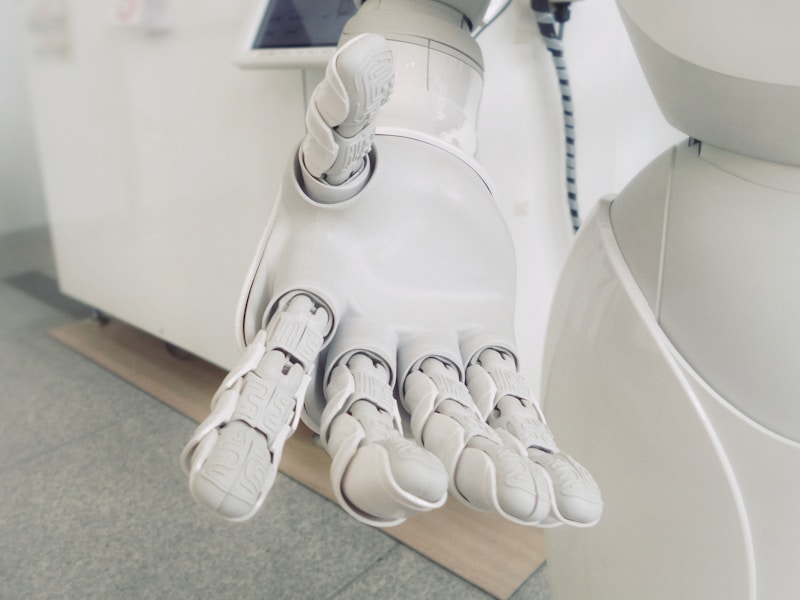
Voice & Language Technologies
With voice assistants, voiceover and natural language processing solutions, we take your brand's communication to next-generation channels.

What we offer
- AI voiceover
- Voice assistant setup
- Multilingual solutions
What work do voice and language technologies take on?
Voice and language technologies is the shared name for the AI tools that turn text into speech, speech into text, translate one language into another, and read and make sense of text. For a business, this can mean adding a voiceover to a promo video without going into a studio, turning meeting recordings into searchable text or adapting a catalog to several languages. Instead of trying these tools out one by one, we set them up by tying them to a concrete job in your communication.
- AI voiceover (text to speech): turns written text into a natural human voice.
- Speech recognition (speech to text): turns recordings, meetings and videos into text.
- Machine translation: transfers text and subtitles into other languages.
- Natural language processing: classifies text, summarizes it and extracts information from it.
- Voice assistant: combines these parts and offers an interface that interacts through speech.
Each of these tools is useful on its own, but the real efficiency appears when they are used together. For example, a training video is first turned into text, the text is corrected and transferred into other languages, and then a new voice recording and subtitles are prepared for each language with AI voiceover. A single recording thus becomes usable in several languages, both spoken and written.
Where to start?
The soundest way to start working with language technologies is to choose a single job that repeats regularly: product videos prepared every month, meetings held every week or a catalog that is constantly updated. We examine together how this job is done today, how long it takes and where it falls short, and we try the new flow on this job first. If the result is meaningful for you, the same approach is carried over to other content.
AI voiceover: from text to natural speech
AI voiceover is the technology that reads your written text aloud in a voice you choose. Current models give far more natural results in emphasis, pauses and intonation than the old robotic voices. This makes voiceover accessible for jobs where arranging a studio and a voice actor for every small piece of content is not practical.
Where is it useful?
- Product promo and social media videos
- Training, onboarding and user guide videos
- Switchboard greetings and on-hold announcements
- Audio versions of articles on the website
- In-store announcements and looping videos on trade show screens
- Versions of the same video in different languages
When is a human voice the better choice?
For commercial films with high emotional intensity, a voice that has become part of the brand identity or work that needs subtle acting, a professional voice actor is still the better choice. AI voiceover brings an advantage in content that is plentiful, updated often and heavy on information. A mixed path can also be followed, such as preparing the main promotional film with an actor’s voice and the short information videos with an artificial voice.
How is a voiceover script prepared?
A text written for the eye is not always a good text for the ear. Explanations in parentheses, long subordinate clauses and bulleted lists become hard to follow when read aloud. Before AI voiceover, splitting the text into short sentences, giving one piece of information per sentence and trying the text by reading it aloud once clearly improves the result.
If a voiceover is being prepared for a video, the text should be written according to the length of the footage and the scene changes. A simple script table showing which sentence matches which scene prevents the audio and the picture from waiting for each other. If you also want to produce the visual side with AI, we can plan it together with our AI image and video content service.
Ease of updating
In a video prepared with AI voiceover, when a price, date or product name changes, it is enough to re-record only the relevant sentence. Because the same voice and the same settings are used, the new sentence cannot be told apart from the old ones. This offers a far more practical way than redoing the whole recording at each change, especially for training and information content that is updated often.
What to watch for in Turkish pronunciation
These are the details that most affect the result of AI voiceover in Turkish texts:
- Numbers and dates: How expressions such as “1/2”, “15,000 TL” or “3-5 days” will be read should be stated clearly.
- Abbreviations: It is decided in advance whether abbreviations such as “KDV” (VAT), “etc.” or “Dr.” will be read letter by letter or in full.
- Foreign brand and product names: How an English product name will be pronounced inside a Turkish sentence is tried one by one.
- Circumflex letters: In words such as “kâr” and “kar”, or “hâlâ” and “hala”, correct spelling directly affects pronunciation too.
- Punctuation: The place of commas and periods decides where the voice will pause; a voiceover script should be written to be heard, not to be read.
Some of these settings are made with a markup language called SSML (Speech Synthesis Markup Language). With SSML, pauses, emphasis and whether an expression is read as a date, a number or a string of letters can be specified. You can see examples of these capabilities on the pages and in the documentation of services such as Google Cloud Text-to-Speech.
Voice selection and voice cloning
From the ready-made voices that services offer, we listen together and choose the ones that suit your brand’s tone; whether it will be warm, formal, young or mature changes with the purpose of the content. Some services can also produce an artificial voice that resembles a specific person from short recordings. A person’s voice is personal data; that is why voice cloning should be done only with the voice owner’s explicit consent, with where and for how long the voice will be used set out in writing.
Using the chosen voice consistently across all videos, announcements and language versions helps the voice become identified with your brand over time. Collecting which voice will be used at which speed and tone setting in a short voice guide keeps the result consistent even when content is prepared by different people.
Turning speech into text: transcription and subtitles
Speech recognition turns audio recordings into readable and searchable text. Within voice and language technologies, it is one of the areas that contributes to daily work the fastest, because businesses already have many recordings: meetings, customer calls, interviews, webinars and videos.
Use examples
- Meeting notes: producing from a recording text separated by speaker, and summaries of decisions and tasks
- Video subtitles: preparing subtitles for social media videos watched with the sound off and for hearing-impaired viewers
- Customer calls: surfacing the topics, questions and complaints that come up often in recorded calls
- Content creation: turning an interview or webinar recording into a blog post, newsletter or social media copy
- Archive: making old audio and video recordings searchable through text
Speaker separation and timestamps
In recordings where more than one person speaks, knowing whom the text belongs to is far more useful than a plain transcript. Many speech recognition services can tell speakers apart and mark the time of each sentence in the recording. This way, in a meeting transcript, it is easy to find who said a particular decision and at which minute of the recording.
What affects accuracy?
The quality of transcription depends largely on the quality of the recording. A microphone close to the speaker, a quiet environment and speakers not talking over each other clearly increase accuracy. Industry-specific terms and names of people and products are the words most often gotten wrong; for these, a term list should be prepared and important texts should be reviewed by a person before publishing.
Reading time and line length also matter in subtitles. Writing speech down word for word does not always make a good subtitle; long sentences are split into parts that can be read on screen, and repetitions and filler words are simplified. For your videos, we can plan subtitles and the AI voiceover step in the same flow together with our social media videos service.
Translation and multilingual content
Machine translation today produces a fast and usable first draft for most texts. The real challenge is making the translation fit your brand and your industry: the same technical term being translated the same way everywhere, the form of address suiting the target culture and product names staying untranslated. That is why, when translating with language technologies, we first prepare a glossary and a style note.
Localization steps
- Glossary: Product names, technical terms and expressions that will not be translated are listed.
- Style note: The form of address, the level of formality and the expressions to avoid are written for each language.
- Machine translation: The text is translated together with the glossary and the note.
- Human check: We suggest that texts to be published be read by someone who knows the language like a native.
- Voice and subtitles: If needed, the translated text is voiced in each language and added as subtitles.
For a multilingual website, an export catalog or a promo video aimed at foreign visitors, this flow gives more consistent results than having the text translated from scratch each time. For content with no margin for error, such as legal texts, contracts and health information, we suggest treating machine translation only as a draft and having the final text approved by a professional translator.
Multilingual voiceover
A translated text is not the same length as the source text; in some languages the same sentence gets clearly longer or shorter. In videos that move with a narrator’s voice, this difference is solved by simplifying sentences or adjusting scene lengths. Transferring the voice of a person speaking on camera into another language is a harder job; for this kind of content, subtitles are often the safer choice.
Cultural adaptation
Even a correctly translated text can seem odd in the target market. Units and currencies, date formats, the place and person names used in examples and jokes should be reworked in every language. The same applies to voiceover: a tone of voice found friendly in one market can be perceived as too formal or too casual in another.
Making sense of text, and voice assistants
Natural language processing understands what a text says and turns it into a job done. Sorting incoming emails by topic, grouping satisfaction and complaints in customer reviews, summarizing long reports or extracting dates, amounts and company names from a document all fall into this area. Here, language technologies work not with voice but with the written text that builds up in your business.
Natural language processing examples
- Review analysis: Grouping Google and marketplace reviews by topic and sentiment to see what you get praise for and what you get complaints about
- Message classification: Sorting support emails into headings such as returns, technical issues or billing and routing them to the right person
- Summarization: Turning long reports, tender documents or call transcripts into short notes
- Information extraction: Pulling specific fields from an order form, quote or contract text and writing them into a table
Natural language processing results are not error-free either; a review that contains irony can be counted as positive, and an email that touches on two topics can be assigned to a single heading. That is why we suggest starting classification and extraction jobs in suggestion mode, meaning the result is put before an employee for approval. When the error rate reaches an acceptable level, the process can be made more automatic.
Voice assistants beyond the phone
When people say voice assistant, the phone usually comes to mind; for an assistant that answers your phone line, you can look at our AI phone assistant page. But the same technology can also be used in other settings: on an information screen in a store or hotel lobby, in a mobile app or in an interface on a website where questions can be asked by speaking. Such a voice assistant is built from the speech recognition, language model and AI voiceover layers working together.
Design is different in settings where screen and voice are used together. The assistant says a short summary of the answer aloud and shows the detail on screen; in a noisy lobby, the user needs to be able to choose typing or touching instead of speaking. That is why we design the voice assistant flow by thinking about the setting it will be used in and the user’s situation at that moment.
Internal processes that run on voice
A voice assistant is not used only to talk to customers. A technical team working in the field telling its visit report to a phone and that account turning into an orderly form, or an employee with full hands in a warehouse asking a stock question by voice, is also possible with the same technology. In this kind of internal process, the aim is to record information without losing it at moments when a keyboard is not practical.
Quality, rights and personal data in language technologies
Voice and language technologies give fast results, but this speed should not turn into uncontrolled publishing. A wrong price read out in an artificial voice, a wrongly translated product feature or a wrongly transcribed name is published in your brand’s name. That is why, for each type of content, we decide in advance at which stage a person will check it.
- License: The commercial use terms of ready-made artificial voices vary from service to service; the license of a voice to be used for advertising or broadcast should be checked in advance.
- Audio recordings: Meeting and call recordings contain personal data; which service they will be sent to and how long they will be kept should be made clear.
- Transparency: In an announcement made with an artificial voice or in a voice assistant conversation, the listener knowing that this is AI protects trust.
- Misleading use: Imitating a real person’s voice and making it say words the person never said is a subject that needs careful handling even when permission exists.
The processing of personal data falls under Turkish Personal Data Protection Law No. 6698 (KVKK). We suggest looking at the guides of the Turkish Personal Data Protection Authority (KVKK) on storing recordings and transferring them to services abroad, and getting the opinion of your legal advisor.
Frequently asked questions
Does AI voiceover sound natural in Turkish?
Current AI voiceover services can give fluent results with natural intonation in Turkish. You need to adjust pronunciation for numbers, abbreviations and foreign product names, and check the result by listening before publishing.
Can we choose which voice is used in the voiceover?
Yes. From the voices services offer, we can listen together and choose the ones that suit your brand’s tone. Cloning a specific person’s voice, however, should only be done with that person’s explicit permission.
Is it safe to turn meeting recordings into text with AI?
Because recordings can contain personal data and business information, the data terms of the service to be used should be reviewed in advance. We recommend using it after it is clear where the recordings are processed, how long they are kept and who can access them.
Does machine translation replace a professional translator?
Machine translation produces a fast and usable draft for most content, but a text to be published needs to be checked by someone who knows the language well. For legal, medical and contract texts, approval by a professional translator is required.
Is a voice assistant used only on the phone?
No. A voice assistant can also work in a mobile app, on a website or on an information screen in a store or hotel lobby. An assistant that answers the phone line is one of the common uses of this technology.
Which languages do language technologies support?
It varies with the service used, but common language technology services support many languages, such as Turkish, English, German, Russian and Arabic. Because voice and comprehension quality differ from language to language, we test each language to be used separately.
Let’s plan your voice and language project together
Tell us about the content you want voiced, the recordings you want turned into text or the languages you want to adapt to; let’s work out together which language technologies it makes sense to start with and how the workflow will be set up. If you have a sample video, recording or text, bringing it to the call makes it easier for us to assess the need in concrete terms. You can reach us through our contact page.
Other services in this section
-
 Chatbots & AI Assistants
We give your customers uninterrupted 24/7 support with AI-based chatbots and automate your sales and support processes.
-
AI Image and Video Content
We use AI tools to produce fast, original and engaging image and video content for your brand.
-
AI-Powered Content Creation
With AI-powered content creation, we produce text, image and video scripts quickly and with originality, and multiply your content capacity.