Commercial Films
We produce short, striking videos that promote your brand and products in the most effective way.

What we offer
- Script and storyboard
- Professional production
- Color and sound design
What are commercial films for, and when do you need one?
Commercial films are made to deliver a single message to the viewer in a short time, with strong impact and again and again. They have a clear goal, such as announcing a launch, spreading a campaign or making the brand memorable, and they usually run on paid media. Viewers do not go looking for ads; that is why a film has to win attention in the first seconds.
In this respect, commercial films differ from corporate films that tell your company’s story through who you are. If you are looking for a film that explains your brand, your production and your team in a few minutes, our promotional films page may be a better fit. In a commercial, the focus is one idea, one emotion and one call to action.
Short, fast content to be shared regularly on your accounts is a different job too; we cover that under our social media videos service. A commercial film shoot, on the other hand, needs longer preparation, a more controlled production and versions prepared according to the media plan.
When should you invest in a commercial film?
- If you are going to announce a new product or service to a wide audience.
- If you have a plan to run on paid media such as television, YouTube, social media or cinema.
- If you want to position your brand’s tone with one strong idea.
- If you will use the same message across more than one medium in a seasonal campaign.
In which formats are commercial films shot?
Very different commercial films can be made for the same product. What decides the format is the message before the budget: showing how a product works and having a brand own an emotion call for different tellings. These are the formats we run into most often:
- Product demonstration: Shows directly what the product does and how it is used; suitable for new and little-known products.
- Problem and solution: Opens with a pain point the viewer recognizes and presents the product as the solution.
- Story and emotion: Places the product in a character’s story; strong for building brand perception.
- Moments of use: Shows the product in everyday life with realistic scenes.
- Animation and motion graphics: Used to explain services that are hard to film or abstract, for example how a piece of software works.
- Pre-launch short films: Short cuts that spark curiosity without showing the product fully.
In some campaigns these formats are combined: an emotional main film and short versions that show the product can be planned in the same commercial film shoot. We decide together which format to choose, based on how well the target audience knows the product.
From idea to script: before the commercial film shoot
A good commercial film shoot starts not from the camera but from the idea. In the brief, we talk about the product, the target audience, the goal of the campaign and the media where the film will run. From this information we set the film’s one-sentence core idea; the script, storyboard and shooting plan serve this idea.
What needs to be settled in the brief
- Core message: The one sentence the viewer should remember.
- Target audience: Who will watch the film, on which screen and at what moment.
- Expected action: Visiting the website, coming to the store, downloading the app or remembering the brand.
- Media plan: Which media, what lengths and which dates.
- Required elements: The logo, slogan, campaign terms and legal notices.
- Topics to avoid: Tones and sensitive themes that do not fit the brand voice.
Sharing examples of ads you like or dislike also helps guide the way. For a commercial film shoot, words like “warm,” “dynamic” or “premium” mean different things to everyone; reference films turn these words into a shared picture.
Concept and script
At the concept stage, we compare several different ideas that tell the same message: a story, a product demonstration, a humorous moment or a before-and-after telling. As the chosen idea turns into a script, the length of each scene is calculated. In a thirty-second film, even one extra scene can blur the message.
In the script, dialogue and voiceover text are read aloud and trimmed to fit the running time. How long on-screen text such as campaign dates or terms stays on screen so that it can be read is also planned at this stage.
Storyboard and animatic
The storyboard is the roadmap that shows every shot of the film frame by frame, with drawings or reference images. Camera angle, movement, the product’s place in the frame and the order of scenes are settled here before the shoot. When needed, the storyboard frames are edited with temporary sound and music into an animatic; that way the film’s rhythm can be seen before the shoot.
Advertising regulation in the script: claims and hidden advertising
In Turkey, commercial advertisements are regulated under Consumer Protection Law No. 6502 and the Commercial Advertising and Unfair Commercial Practices Regulation based on it. According to the Ministry of Trade’s information page on the Advertisement Board, commercial advertisements are expected to be honest and truthful and to comply with the principles set by the Advertisement Board, with general morality, public order and personal rights.
The same page states that advertisers are obliged to prove the accuracy of the claims in their ads, and that advertisers, advertising agencies and media organizations are obliged to follow these rules. The rules apply to commercial ads published in every kind of medium, including television, radio, newspapers, the internet and outdoor.
For this reason, at the script stage of commercial films, we look together for answers to these questions:
- Can you document claims in the film such as “the fastest,” “the most preferred” or “twice as durable”?
- Are the campaign terms, dates and prices on screen accurate and readable?
- If there is a comparison with competing products, are products that meet the same need being compared?
- Is there a special regulation on advertising in the industry your product belongs to?
Using a brand, logo or product name within a broadcast or piece of content for promotional purposes without clearly stating it is an ad counts as hidden advertising and is prohibited. That is why it is important to state clearly that something is an ad in collaborations with content creators or inside broadcasts. This section is for general information; we recommend getting legal support in special cases.
Production in a commercial film shoot
In pre-production, decisions are made on casting, venue, costumes, art direction and equipment; the shoot day is planned hour by hour. In a commercial film shoot, every hour spent on set shows up in the budget, so this plan directly determines how productive the day is. Which scene will be shot in which order and in which light is known in advance.
Who is on set?
In a commercial film shoot, the director, the director of photography, the art director, the lighting and camera crew, sound recording, hair and makeup, costume and the actors all work from the same plan. The size of the crew varies with the script; a product film set in a single venue and a crowded story film do not need the same crew.
Having someone on the brand side who can make decisions on set speeds things up. Small decisions, such as how the product will be held or whether a line will change, need to be made quickly on the shoot day.
Casting and usage scope
In casting, the brand’s target audience and the tone of the film are the deciding factors. In the agreement with the actor who will be the face of the ad, the media, duration and countries of the broadcast must be clearly written. Some brands also require that the actor not appear in a competing brand’s ad for a certain period; conditions like this affect the budget.
Product, venue and art direction
The product is the lead of commercial films. The front of the packaging, the legibility of the logo and the moment of use are checked in every shot; having spares of the product on set also prevents the shoot from being disrupted. When the venue’s colors, the costumes and the decor are chosen to match the brand’s color language, the film looks like it came from a single identity.
Product close-ups
Product close-ups are often shot on a separate tabletop setup. Moving shots such as a drink being poured, the texture of a cream or a part clicking into place are repeated several times and recorded in their cleanest form. In commercial films, these few seconds of footage are the strongest moments that convey the product’s quality.
Shooting in public spaces
For a commercial film shoot planned in places such as a street, a park, a beach or a public building, permission from the relevant authorities may be needed. In private venues, making a written filming agreement with the venue owner prevents surprises on the shoot day. Permit procedures need to be included in the shooting schedule from the start.
Editing, color and sound design
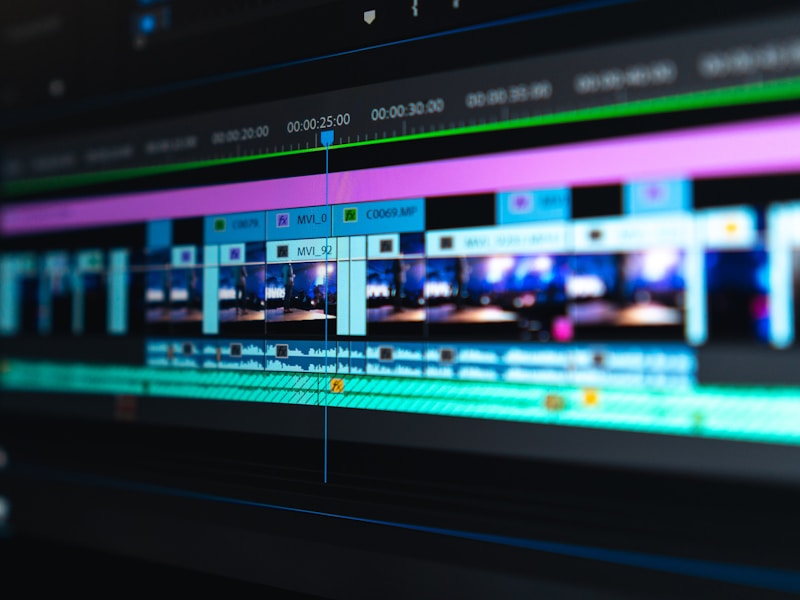
After the commercial film shoot, the film is rewritten in the edit. Rhythm, scene transitions and timing to the second are set at this stage; a sequence that looked good in the storyboard can sometimes change in the edit. The picture then goes through color grading, and the sound goes through design and mixing.
Color grading
Color grading gives shots filmed under different lights the same look and sets the feeling of the film. Warm tones can evoke warmth and friendliness, while cool, high-contrast tones can evoke technology or strength. The color of the product and the logo must be preserved in this grading; a corporate red drifting toward orange damages brand perception.
Sound design and music
In commercial films, sound is as important as picture. Voiceover, dialogue, effects and music are prepared as separate layers and balanced. Small effects such as the sound of a cap opening or a glass filling make the product feel more real on screen.
Using a well-known song in an ad requires permission from the rights holders of both the work and the recording, and can be costly. Licensed music libraries or music composed for the film are more predictable options. Not leaving the music decision to the end of the edit lets you set the rhythm right from the start.
Voiceover and narration
The voiceover is one of the elements that set the film’s personality. The age, tone and pace of the voice should fit the audience the brand speaks to; an energetic product aimed at a young audience and a service that stresses trust call for different voices. Deciding after listening to test recordings from a few voice artists makes this choice easier.
On-screen text and the end frame
On-screen text, product information, campaign terms and the logo and call to action in the end frame are the work of graphic design. The end frame is the image of the film that stays in memory; the logo, the slogan and what the viewer should do need to be clear in this frame.
Commercial films by medium: length, ratio and versions
The same film is not watched the same way in every medium. On television, the viewer usually watches the film with sound on and on a horizontal screen; in a social media feed, the video is watched on a vertical screen, while scrolling, and the viewer may have the sound off. That is why we plan commercial films not as a single main film but as a family of versions adapted to each medium.
Why do the first seconds decide so much?
A viewer moving through a feed decides very quickly whether to stay on a video. That is why, in the opening of commercial films, the product, the brand or a moment that sparks curiosity should appear right away. Leaving the logo only to the end frame means a person who does not watch to the end never sees the brand; shooting the opening in a few different ways, on the other hand, makes it possible to test which one works better after launch.
YouTube and video ad lengths
According to Google Ads’ video ad formats page, skippable in-stream ads can be skipped by the viewer after 5 seconds; bumper ads are non-skippable videos that run 5 to 6 seconds. This means the brand and the core idea must appear in the first seconds of the film. Because platform rules can change over time, we check the current terms before publishing.
Multiple versions from one commercial film shoot
So that the campaign looks consistent across different media, we usually plan these versions from the same shoot:
- Main film: The long version that tells the whole story.
- Short cuts: 15-second and 6-second versions.
- Vertical versions: 9:16 ratio for Reels, Stories, TikTok and YouTube Shorts.
- Square and 4:5 versions: For social media feeds.
- Subtitled versions: For viewers who watch with the sound off.
Producing these versions afterward by cropping does not always work well; in a scene set up for a horizontal frame, the product may fall outside the frame in a vertical cut. That is why, in a commercial film shoot, we set up the camera and the scene with the different ratios in mind.
Television broadcast
For commercial films that will run on television, the channels’ technical broadcast requirements and the layout of the ad break are decisive. Getting these requirements in advance from the media agency that handles the broadcast planning or from the channel reduces the need for rework at the last stage.
After launch: how are commercial films evaluated?
When the film goes live, the real test begins. Which version gets watched more, at what point viewers drop off and whether the film brings visitors to the website or the store are the most valuable pieces of information for the next film. If viewers leave in the first seconds, the problem is often in the opening scene.
Getting the film to the right audience on the budget is a separate area of expertise. We explain the targeting, budget and testing process on our social media advertising page. Thinking about the film together with the media plan also clarifies which versions are needed at the shoot.
How long can the same film be used?
A commercial film can be used as long as its message and campaign are current; however, its effect fades when it is shown to the same audience too often. Shooting different opening scenes or alternative end frames in addition to the main film on the shoot day makes it easier to produce new versions later.
The shooting archive keeps its value after the campaign ends too. Unused shots, behind-the-scenes footage and product close-ups can be reused on social media, on the website or in preparing the next campaign. For this, you need to check from the start whether the actor and music agreements cover this kind of use.
Scope and common mistakes
What determines the budget of a commercial film shoot?
- The complexity of the script and the number of scenes.
- The number of shooting days and locations.
- The number of actors and the usage scope.
- Art direction, set, costume and special equipment needs.
- Animation, graphics and visual effects.
- A music license or an original composition.
- The number of versions and languages to be prepared.
Common mistakes in commercial films
- Fitting everything into one film: A film that carries three messages leaves none of them in memory.
- Hiding the brand at the end: The viewer may leave before reaching the end frame.
- Not thinking about silent viewing: Dialogue without subtitles cannot be understood in a feed.
- Thinking about versions afterward: In a vertical cut, the product may fall out of frame.
- Claims that cannot be documented: They create regulatory risk.
- Leaving the music to the last day: If the license cannot be obtained, the edit has to be redone.
Frequently asked questions
What is the difference between a commercial film and a promotional film?
Commercial films are short, single-message films that usually run repeatedly on paid media. A promotional film tells the story of the company, the team and the way of working in a longer, more explanatory style.
How long does a commercial film shoot take?
It varies with the complexity of the script, the number of actors and venues, permit procedures and the number of versions. The schedule is set together once the brief and the script are settled.
How many seconds should a commercial film be?
There is no single right length; the length is set by the medium and the message. A commonly used approach is to prepare 15-second and 6-second short versions along with a main film.
Which rules must commercial films follow?
In Turkey, commercial advertisements must be honest and truthful and comply with the principles set by the Advertisement Board. Advertisers are obliged to prove their claims, and hidden advertising is prohibited.
Can a vertical video for social media be made from the same commercial film shoot?
Yes, vertical versions can be produced from the same shoot if they are planned from the start. When the camera and the scene are set up with different ratios in mind, the product and the actor stay in frame in every cut.
Let’s plan the film for your campaign together
If you are planning commercial films for a launch, a seasonal campaign or a brand film, we can start by talking about the core message and the media plan. Share your product, your target audience and the media where the film will run, and we will prepare an approach and a quote that fit you. You can use our contact page for a first call.
Other services in this section
-
 Product Photography
We shoot aesthetic, professional photos that show your products at their best.
-
Social Media Videos
We increase your visibility on social media with short, engaging content that follows the trends.
-
Event Photography and Video
We record the unforgettable moments of your trade shows, conferences, launches and other events.